
Charging Infrastructure That Integrates Safely With Existing Systems
EV Chargers in Crofton for homeowners adding electric vehicles and requiring reliable charging without panel overload
Adding a Level 2 EV charger to a residential electrical system requires evaluating panel capacity, installing a dedicated circuit, and positioning the charger where it serves vehicles without creating tripping hazards or exposure to weather. Most Level 2 chargers draw between 30 and 50 amps continuously, which exceeds the capacity of standard household circuits and demands its own breaker and wiring. Setera Electrical Contractors, LLC evaluates electrical systems in Crofton to determine whether current panel capacity supports charger installation or whether service upgrades are required before equipment is added.
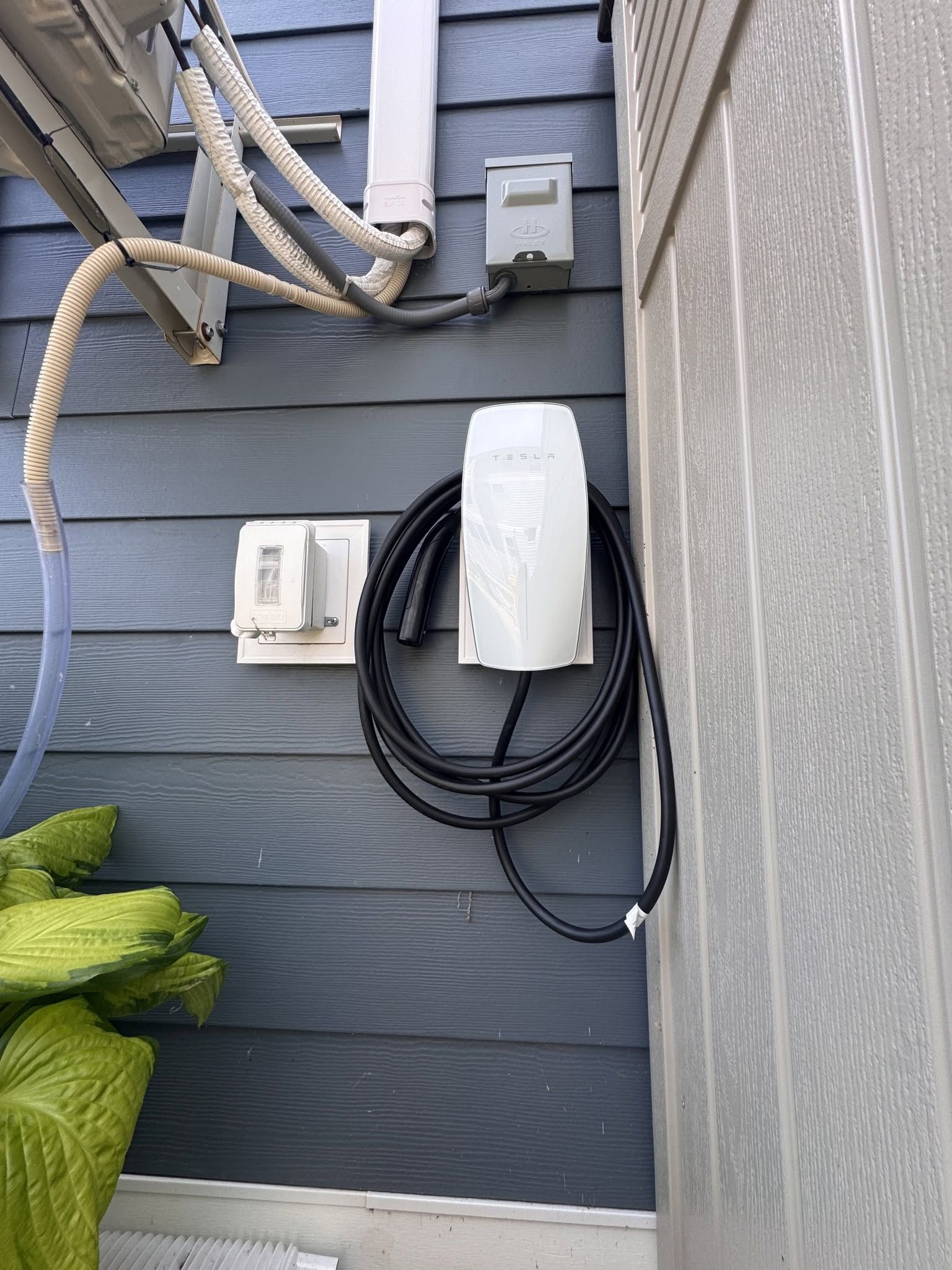
Professional installation includes calculating total household load to confirm the panel can handle the added circuit, running appropriately sized conductors from the panel to the charger location, mounting the charger securely on exterior walls or garage interiors, and testing operation before the vehicle is connected. Charger location depends on where vehicles park, the distance from the electrical panel, and whether wiring can be routed through walls, attics, or conduit without excessive cost.
Request a home EV charging estimate that includes panel evaluation and installation planning based on your specific vehicle and parking configuration.
What Safe Integration With Existing Electrical Systems Requires
Safe charger integration begins with verifying that the panel has available breaker slots and sufficient total capacity to support continuous 30- to 50-amp draw without forcing other circuits to compete for power. Electricians measure current household load, check service entry amperage, and determine whether adding the charger circuit leaves adequate margin for simultaneous appliance use. When panel capacity is insufficient, charger installation is delayed until panel or service upgrades are completed, which prevents breaker trips, voltage sags, and equipment damage caused by overloading.
After installation, you notice the charger delivers consistent power overnight without affecting indoor lighting or appliances, the dedicated circuit prevents tripping even when other high-draw devices operate, and the vehicle reaches full charge within the expected timeframe. Setera Electrical Contractors, LLC mounts chargers at heights that avoid contact with vehicle doors or pedestrians and routes wiring to minimize visible conduit or surface-mounted cable.
Charger projects often coincide with panel upgrades when households add multiple electric vehicles, install solar arrays, or replace gas appliances with electric models. Coordinating these projects allows electricians to plan total capacity requirements and complete all work during a single service interruption rather than upgrading incrementally.
Common Questions Homeowners Have About EV Charger Installation
EV charger installation involves electrical capacity planning, wiring, and equipment placement, and understanding these factors helps homeowners prepare for the project accurately.
What determines whether an existing panel can support an EV charger without upgrades?
Licensed electricians calculate total household load by adding the charger's continuous amperage to current appliance and HVAC usage, then compare that total to the panel's rated capacity, and if the sum exceeds 80 percent of available capacity, service or panel upgrades are required before the charger is installed.
How does charger location affect installation cost and project complexity?
Chargers mounted on exterior garage walls near the electrical panel require shorter wire runs and less conduit, while chargers installed on detached structures or far from the panel increase material and labor costs due to longer wiring distances and additional protection requirements.
Why do some charger installations require permits and inspections in Crofton?
Dedicated circuits rated for 30 amps or higher require electrical permits, and inspections verify that wire sizing, breaker selection, grounding, and charger mounting meet code, which protects homeowners and ensures insurance coverage remains valid if electrical issues occur later.
What happens if the charger draws more power than the circuit is rated to handle?
Circuit breakers trip immediately when draw exceeds rated capacity, which interrupts charging and requires resetting the breaker, so electricians size circuits to match charger specifications and leave margin for voltage fluctuations and continuous-use requirements that prevent nuisance tripping.
How do electricians plan for households with multiple electric vehicles?
Multiple chargers require separate dedicated circuits unless load-sharing equipment is installed to distribute available power between vehicles, and total charger load is added to household calculations to determine whether service entry upgrades from 100 to 200 amps are necessary to support simultaneous charging and appliance use.
Setera Electrical Contractors, LLC installs Level 2 EV chargers with attention to panel capacity, safe wiring practices, and charger placement that serves vehicles reliably. Schedule an evaluation to determine what preparation your electrical system requires before charger equipment is installed.