
Panels That Distribute Power Without Overloading Circuits
Electrical Panel & Service Upgrades in Crofton for homes where growing electrical demand exceeds current panel capacity
The electrical panel distributes incoming power to individual circuits throughout your home, with each breaker controlling specific outlets, appliances, or lighting zones. When household electrical demand increases due to heat pump installations, EV chargers, smart-home devices, or kitchen remodels, the panel may lack sufficient breaker slots or total amperage to support additional load safely. Setera Electrical Contractors, LLC evaluates panel condition, service entry capacity, and circuit usage in Crofton before recommending whether to add breakers, install a subpanel, or replace the panel entirely.
Evaluations for older equipment include checking fuse boxes that require replacement rather than upgrades, inspecting panels with aluminum bus bars that pose fire risk, and measuring whether the service entry delivers enough amperage for current usage. Panel replacement becomes necessary when breakers no longer seat properly, corrosion affects connections, or the panel was manufactured by companies whose equipment is no longer code-compliant.
Request a free estimate that includes panel inspection and load calculation to determine which upgrade matches your household requirements.
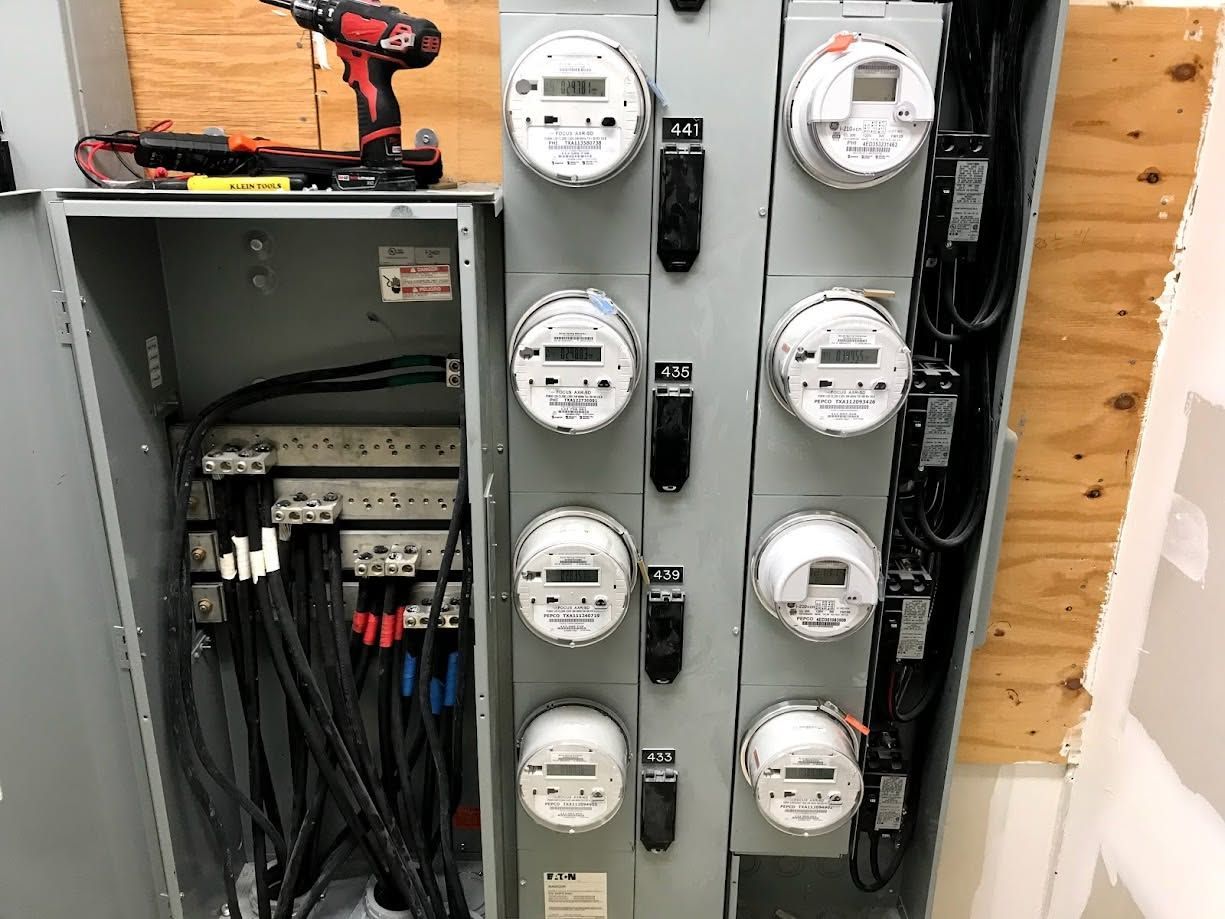
Why Service Entry Capacity Limits What the Panel Can Support
Service entry capacity refers to the total amperage delivered to your home from the utility connection, typically 100, 150, or 200 amps in residential properties. The panel cannot distribute more power than the service entry provides, so upgrading the panel without increasing service capacity does not solve problems caused by insufficient total amperage. Electricians measure current draw during peak usage, calculate the load added by planned equipment, and determine whether the service entry requires upgrading before panel work begins. Utility coordination is required when service entry changes, which adds time to the project but ensures safe, code-compliant capacity.
After upgrades are finished, you notice breakers that no longer trip when the dryer and HVAC system run simultaneously, the ability to install EV chargers or added appliances without sacrificing existing circuits, and panel labeling that clearly identifies which breaker controls which area of the home. Outlets maintain steady voltage under load, lights no longer dim when motors start, and the panel includes space for future circuits if additional remodeling occurs.
Subpanels serve specific areas such as detached garages, workshops, or home additions where running individual circuits to the main panel would be impractical. Subpanels are fed by a single large breaker in the main panel and distribute power locally, reducing wiring costs and allowing dedicated circuits for high-demand equipment.
Questions Property Owners Ask Before Panel Work Begins
Panel and service upgrades affect how electricity is distributed throughout the home, so understanding what the work involves and when it becomes necessary helps homeowners plan accurately.
What indicates that a panel replacement is required rather than simply adding circuits?
Replacement is necessary when the panel is full with no room for additional breakers, when the panel brand has been recalled or is no longer code-compliant, when corrosion or burn marks indicate failing connections, or when the existing panel cannot accommodate the amperage required by new equipment even if slots remain available.
How does increasing service capacity differ from upgrading the panel itself?
Increasing service capacity involves replacing the meter base, service entry conductors, and utility connection to deliver higher total amperage, while upgrading the panel replaces the breaker box and internal distribution equipment, and both may be required if current service entry is insufficient for planned electrical load.
Why do electricians calculate load before recommending upgrades?
Load calculation prevents over-sizing equipment unnecessarily and ensures that the panel and service entry can safely handle continuous and peak usage without exceeding rated capacity, which is required by electrical code and affects inspection approval.
How do EV chargers and new appliances factor into panel planning?
Level 2 EV chargers typically require dedicated 40- or 50-amp circuits, while heat pumps, electric ranges, and tankless water heaters add significant continuous load, so these devices are included in load calculations to determine whether existing capacity suffices or whether service upgrades are needed first.
What happens during a panel upgrade in Crofton regarding utility coordination and inspection?
Licensed electricians coordinate with the utility to disconnect and reconnect service, install the new panel and connect circuits, label breakers according to areas served, and schedule inspection to verify code compliance before the system is energized and returned to normal operation.
Setera Electrical Contractors, LLC provides panel evaluations that include load analysis, equipment inspection, and clear recommendations based on current and anticipated electrical demand. Contact us to receive a free estimate that explains which upgrades apply to your home and why they matter for safety and functionality.